
The Colony Resident Lookup Results
For The Colony, start with the record whose role fits the clue. A same-name result is only a lead until a second independent record agrees on a time, address, relationship, or case identifier. Recorded ownership and a tax mailing address are not proof that someone currently occupies a property. A court listing is not proof of guilt or residence. An event index is not the underlying certificate. This separation keeps a resident lookup focused on evidence rather than assumptions.
| Record source | What it can establish | Official route | Access limit |
|---|---|---|---|
| DCAD and county tax account | Recorded owner, mailing address, situs, parcel or tax account | DCAD and Denton County tax search | Ownership is not occupancy |
| Texas My Voter | Registration status, VUID, precinct and participation information | Texas Secretary of State portal | No ballot choices; protected addresses may be suppressed |
| District or county court record | Party, cause, court, dates, activity and filings where indexed | Denton public access and clerk terminals | Case is not proof of guilt or current address |
| DSHS vital index | Indexed birth, death, marriage or divorce event lead | DSHS and the record custodian | Certificates have eligibility rules |
| Deed or plat | Grantor/grantee and legal-description chain | Denton County official-records search | Shows a document role, not a complete biography |
| License or entity filing | Credential, entity, officer or agent role | TDLR, board, TEA or SOS routes | Never infer residence or workplace |
In The Colony, use a property or tax record when an address or parcel is known, the voter portal for an individual registration question, court or clerk records for a case lead, and DSHS only for a vital-event trail. UNT newspapers and historical directories can provide older context but still need identity checking.
The Colony Lookup Needs Two Identifiers
Before combining records, write down the exact name and one additional, minimally necessary identifier: a date range, spouse or relative, street, property ID, cause number, business name, license number, or newspaper date. Then search middle initials, married or maiden variants, and spelling changes. The second identifier should be used to reject matches as often as it is used to confirm them. An old mailing address, an attorney address, or a similarly named person in another city should remain a separate lead.
For The Colony property questions, DCAD fields can include owner or filing name, mailing address, situs address, legal description, subdivision, block, lot, and property identifiers. Denton County’s separate tax search offers Account Number, Owner Name, Owner Address, and Property Location. The latter two are materially different: an owner mailing address can be elsewhere, while Property Location is the actual taxed location.
The Colony Voter Lookup Inputs
The Texas My Voter portal is an individual lookup, not a browseable The Colony roster. The name route uses first and last name, county, date of birth, and ZIP code; VUID and a Texas driver license number furnished at registration are alternate routes. A valid result may show registration status, VUID, precinct, district or polling information, and participation history, but not how a person voted. The public display and current portal controls can change, so preserve only what the official result presents.
The official voter-lookup form is the source for name, county, date, ZIP, and VUID pathways used in The Colony.
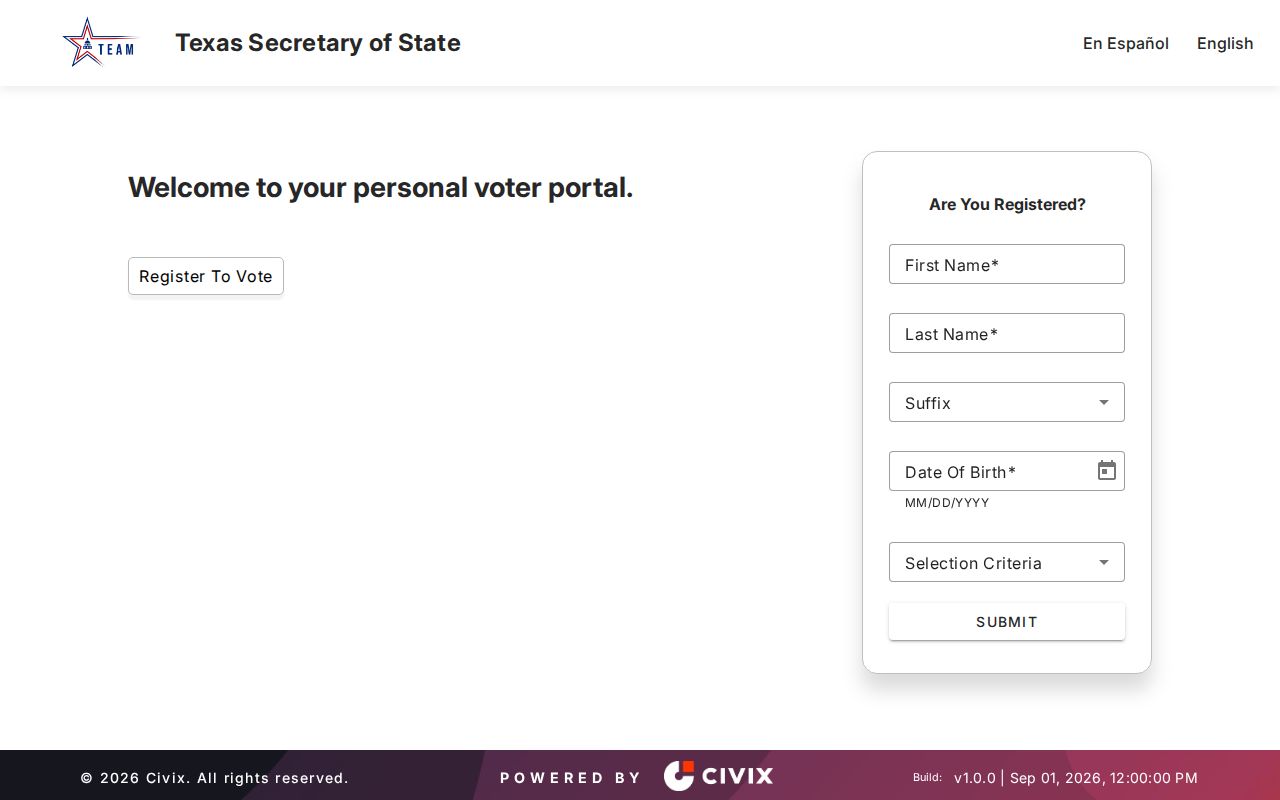
Protected voters can be represented with ***, and Address Confidentiality Program participants may not match in an ordinary search. A non-match therefore does not prove that a person is absent from The Colony. If a record looks wrong, the county voter registrar, rather than another same-name web result, is the correction route.
The Colony Court Lookup Verification
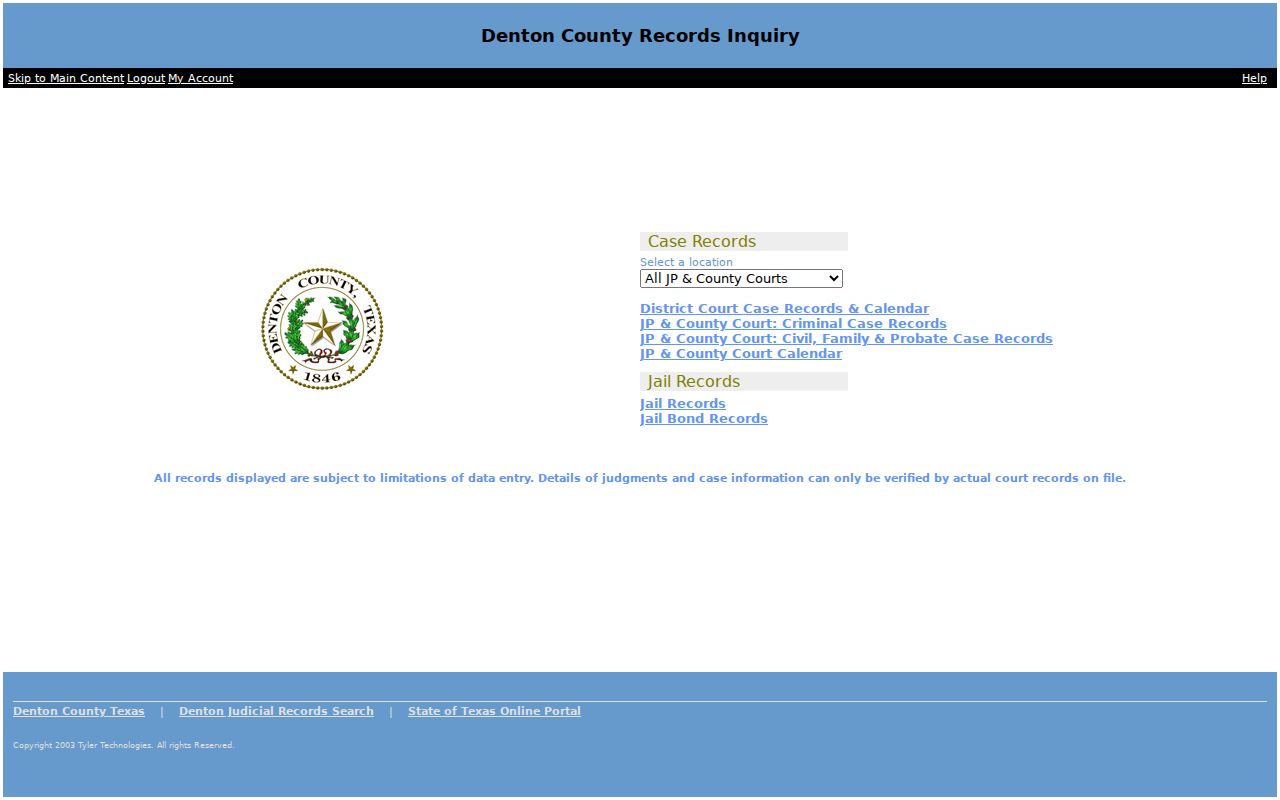
For court research in The Colony, the Denton County public-access portal is dynamic; the research did not capture its live fields, so no unverified filters are claimed here. County guidance directs users to District Court Case Records and Calendar and says that documents in case files are viewable only on public computers in the clerk or courthouse lobby. The county’s judicial-records landing page also warns that display data has entry limits and that the actual court record is the place to verify a judgment or detail.
The public-access entry point is shown below. Search results should be treated as an index to the clerk record, not a complete identity profile.
| Party and style | Names and roles for the particular case, plus an attorney or agency only if shown. |
|---|---|
| Cause and court | Cause or case number, court, category, and filing date. |
| Actions and papers | Registry of actions, documents or orders, and hearing or calendar activity where indexed. |
| Disposition | Judgment or disposition only where the index shows it; verify against the court record. |
| Identity limits | Do not assume a full date of birth or address appears. Any address in a filing can be dated, redacted, or unrelated to residence. |
The District Clerk has public computers in its lobby and the Denton County Courthouse lobby at 1450 E. McKinney, Monday through Friday, 8:00 a.m. to 4:30 p.m. A search is $5. Plain paper is $1 per page; certified paper is $5 plus $1 per page. Plain electronic copies are $0.10 per page with a $1 minimum, and certified electronic copies are $5 plus $0.10 per page with a $1 minimum. Sealed and statutory-restricted files, including juvenile material, are unavailable. The Colony Municipal Court at 5151 N. Colony Blvd. has no public online name search identified; use its official office or court-specific request route for The Colony matters.
The Colony Vital Index Route
For The Colony vital trails, Texas DSHS makes birth indexes from 1925 forward, death indexes from 1965 forward, marriage indexes from 1966 forward, and divorce indexes from 1968 forward available as historical or verification leads. Those indexes can contain misspellings or omissions. Birth records are public after 75 years and death records after 25 years, but recent certificates remain restricted to a qualified person with required proof. DSHS is the statewide route for birth and death records; a certified marriage license comes from the county clerk that issued it, and a certified divorce decree comes from the district clerk that granted it.
The Texas online vital-record application is the official online ordering route for eligible applicants.
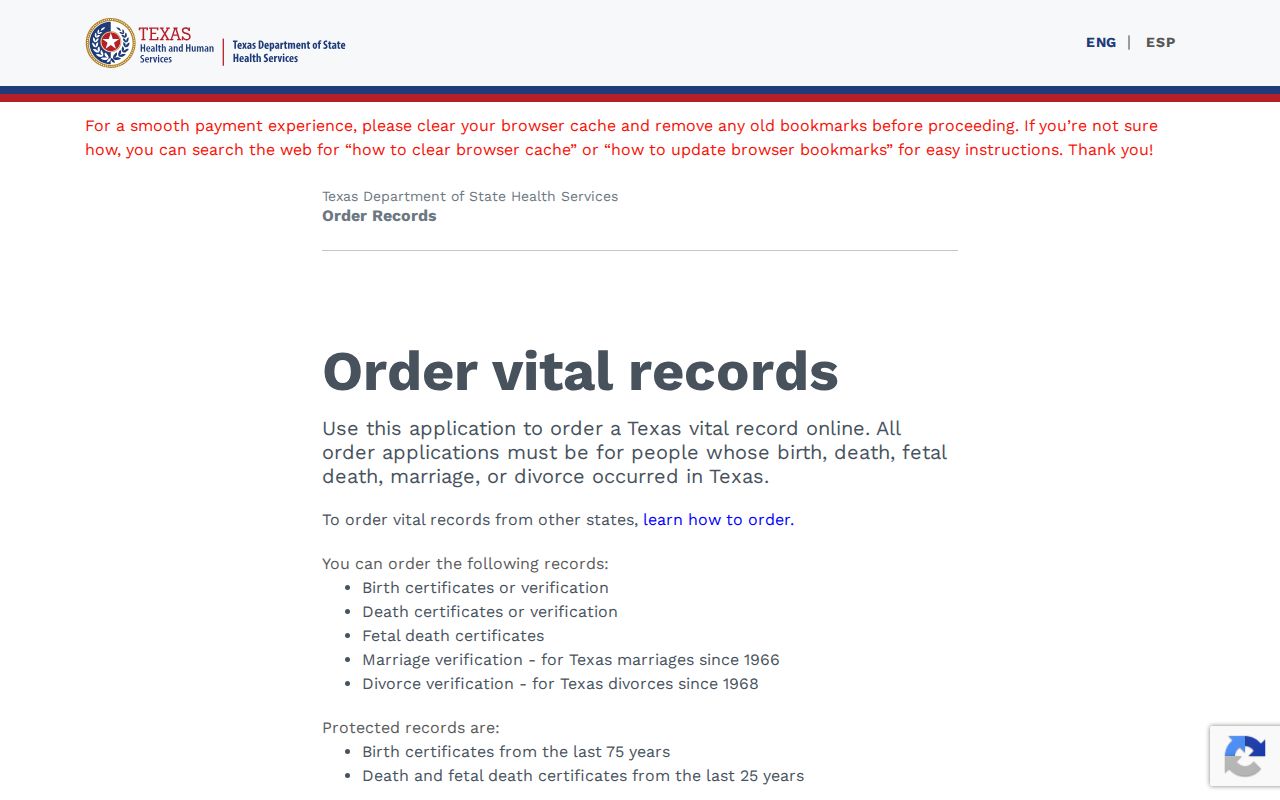
The application route requires identification, relationship or tangible-interest proof when applicable, event details, payment, and delivery choices. Fees documented in the research include $22 for a certified birth certificate or birth verification, $20 for a first death certificate, $3 for an additional death certificate in the same order, and $20 for a marriage or divorce verification. A verification is not a certified marriage license or divorce decree. The Texas Central Adoption Registry is voluntary and restricted matching for eligible participants from The Colony, not a public name search.
Verify The Colony Resident Lookup
Once a potential match has two compatible clues, run a short cross-source check. In The Colony, that sequence limits the risk of merging one person’s court, property, or historical record with another person of the same name. It also leaves a clear audit trail when a result has to be corrected or a document must be requested from the custodian.
- Record the exact name, source date, source URL, and the second identifier before searching another system.
- Use DCAD or Denton tax results to distinguish recorded owner, mailing recipient, situs, parcel, and legal description. Do not label any of these as current occupancy.
- Run the exact and variant name through the court index only when a case question exists; compare filing date, court, cause number, and party role rather than assuming a match from a name alone.
- Use a DSHS index or an official historical newspaper as a corroborating event clue. Request a copy from the correct county clerk, district clerk, local registrar, or DSHS only when eligibility and purpose support it.
- Keep a conflicting result separate. A mismatch is useful evidence that the resident lookup has not yet identified one person.
- Docket
- The court’s running case entry, typically showing a case number, parties, dates, and listed actions. It is not automatically the complete file.
- Index and image
- An index is a searchable list or summary. An image is a scan of the underlying record and may require a clerk terminal, fee, or request.
- Certified copy
- A custodian-issued copy carrying the office’s certification. A portal view or verification letter is not necessarily a certified record.
The Colony Lookup Roles Stay Separate
For The Colony, SOSDirect can identify an entity, filing history, registered agent, or office. TDLR, TEA, and other board searches can identify a credential and status. These are role-specific sources only. A registered-agent address, entity address, certification result, or a city staff listing does not establish a home address, current location, or connection to a particular The Colony resident. Label each result with the role actually shown and verify it with the responsible agency if it matters.
Commercial compiled people-search products are a category of stale or uncertain associations, not an official source to combine with public records. They are not named or linked here. For The Colony historical context, use the locally digitized UNT newspapers or the library’s in-person genealogy resources and retain the original source date.
The Colony Lookup Privacy Rules
A written Texas Public Information Act request asks the governmental body for existing, identifiable records; it does not require a stated reason and does not require an agency to create a new report. The Colony City Secretary accepts requests by mail or in person, fax or email, and JustFOIA. The Act calls for prompt production or communication, and the city states that it will contact requestors within ten business days. Ask for a specific record type and date range, request electronic inspection when that is enough, and seek a cost estimate before a broad request creates charges.
Records held by courts follow their own clerk and court procedures rather than the ordinary executive-records route. Confidential voter addresses, Address Confidentiality Program information, protected personal identifiers, juvenile matters, sealed cases, and some active-investigation material remain restricted. A public record is not a license to republish personal identifiers or to facilitate contact.
Lawful use. Use a resident lookup in The Colony for personal, lawful research such as verifying a dated record or reconstructing family history. Texas Penal Code sections 42.072 and 42.07 address stalking and harassment; never use record fragments to monitor, threaten, pressure, or contact someone.